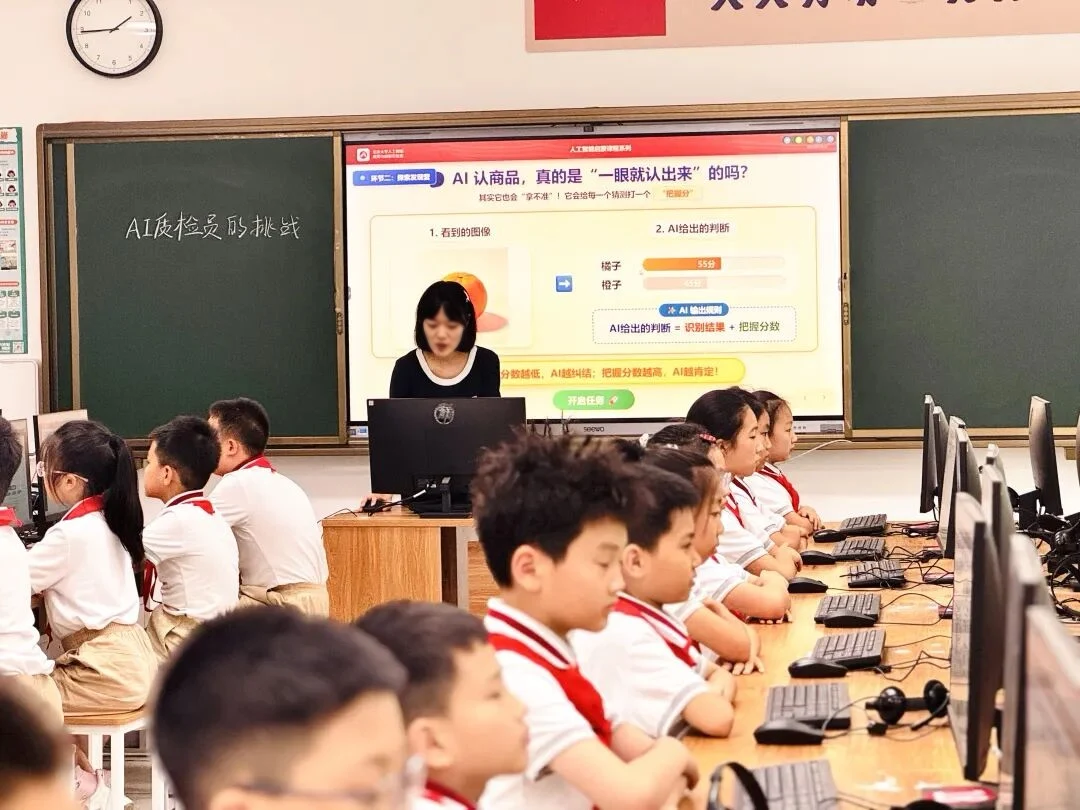
At Mushan Xincheng Primary School, the elementary AI literacy curriculum developed with the Peking University AI Application & Innovation Lab begins with hands-on experiences that help students build a foundational understanding of AI. Moving from experience and understanding to creation, students apply technology in real-world settings so that conceptual knowledge and practical skills develop together.
The school also offers aerospace-themed inquiry courses centered on learning by doing. Through the Terraforming Mars project, experts from the Beijing Planetarium join school teachers online to co-teach lessons, guiding students to ask questions and investigate problems through practical activities while developing scientific literacy and innovation skills.
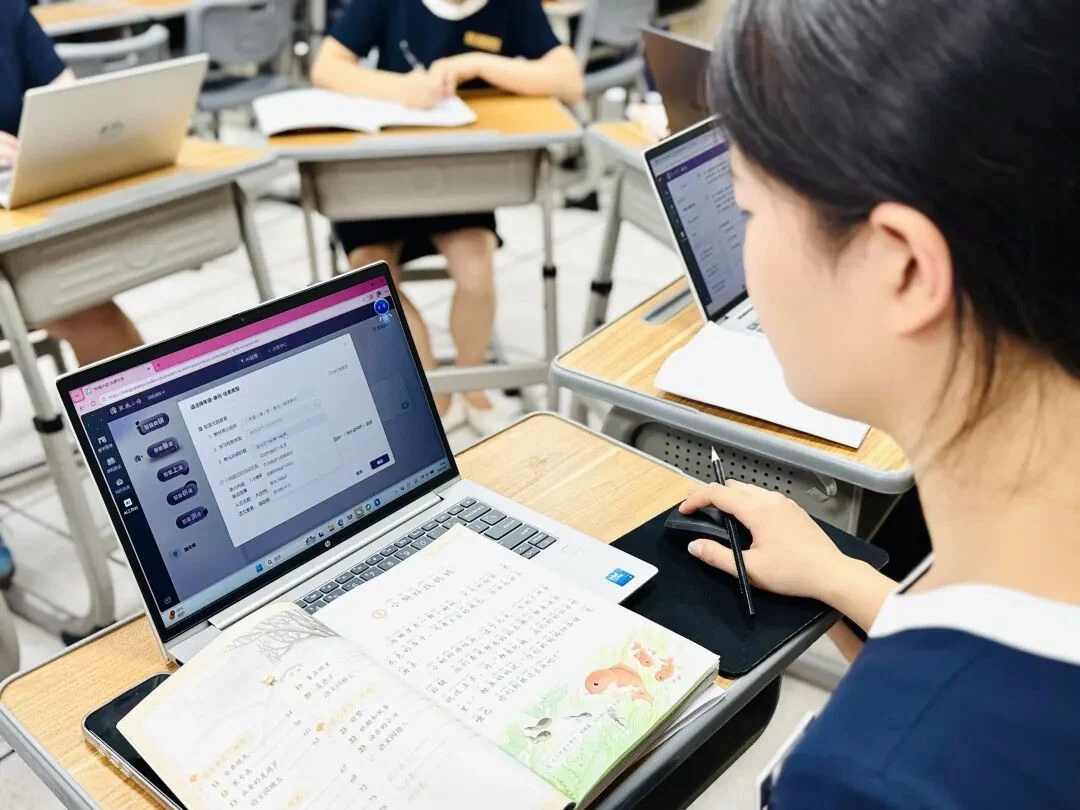
Alongside these distinctive courses, Teacher AI Harness supports the entire teaching workflow across subjects. In the school’s Chinese language arts classes, the platform has been configured with subject-specific resources drawing on the distilled expertise of a master teacher with 40 years of experience in thematic teaching. During lesson preparation, teachers enter their learning objectives and information about students’ current knowledge and abilities, and the platform generates a comprehensive lesson plan with relevant materials and exercises. In the classroom, digital avatars interact with students and answer questions in real time. After class, the platform automatically produces data analysis reports, helping teachers shift from experience-based reflection to data-informed evaluation.
“The platform offers a wealth of exemplary lessons,” says Chinese language teacher Li Qian. “It not only reduces preparation time but also helps me design differentiated instruction based on my students’ learning needs, freeing up more time for one-on-one support for students who need extra help.”
The school is also working with the Peking University AI Application & Innovation Lab to jointly develop the “Digital and AI-Powered Growth Platform.” Designed to provide tailored AI agents for four roles—students, teachers, school administrators, and principals—the project aims to support digital teaching, student growth, and school-wide management.