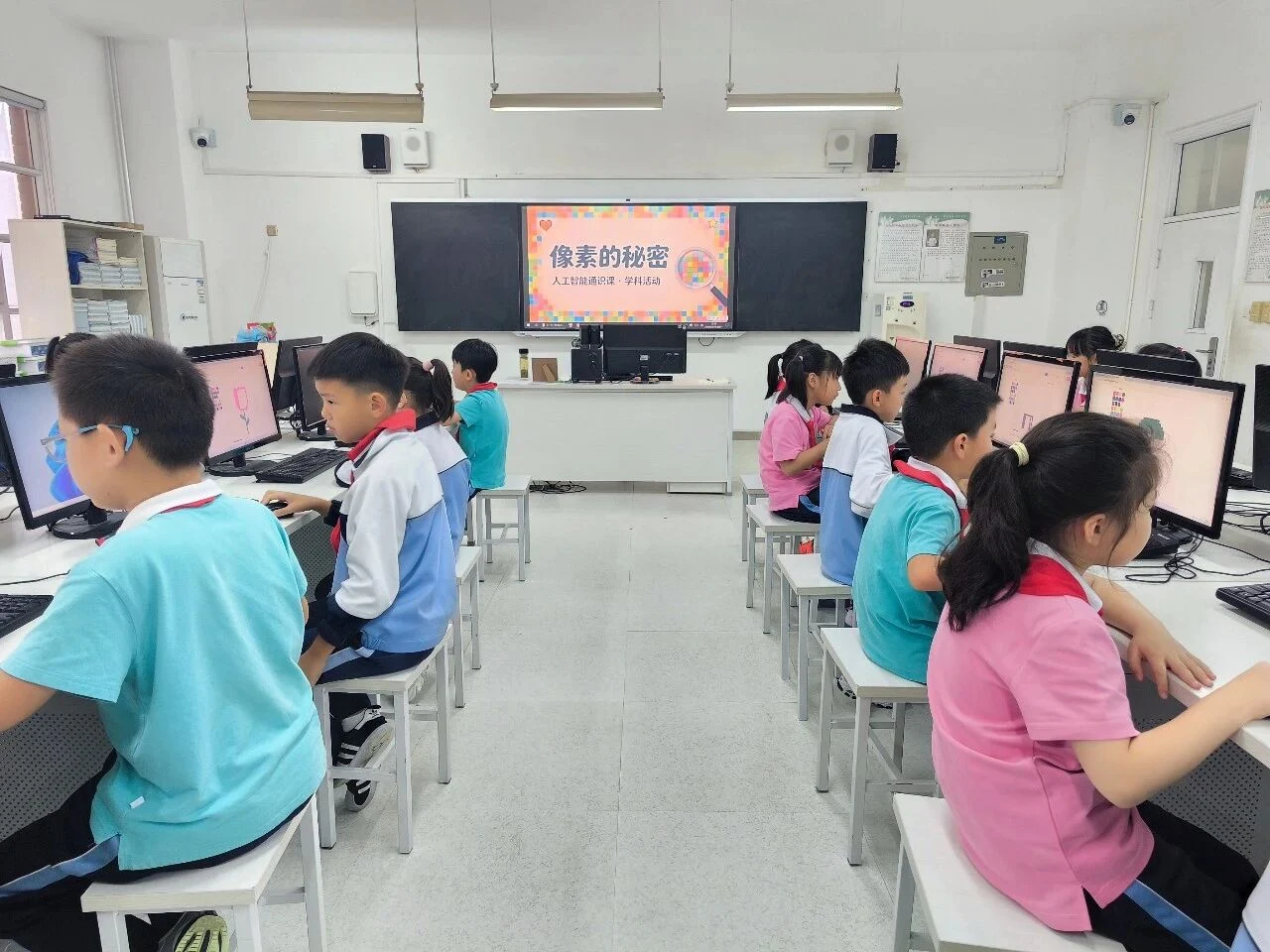
In September 2026, Grade 3 students at Xi’an Jingkai No. 1 School took part in a hands-on AI learning activity introducing the basic principles of digital images. Drawing on “The Secrets of Pixels,” a Grade 3 lesson from the AI literacy curriculum developed with the Peking University AI Application & Innovation Lab, the activity focused on three themes: understanding pixels, creating pixel art, and exploring how images are digitized.
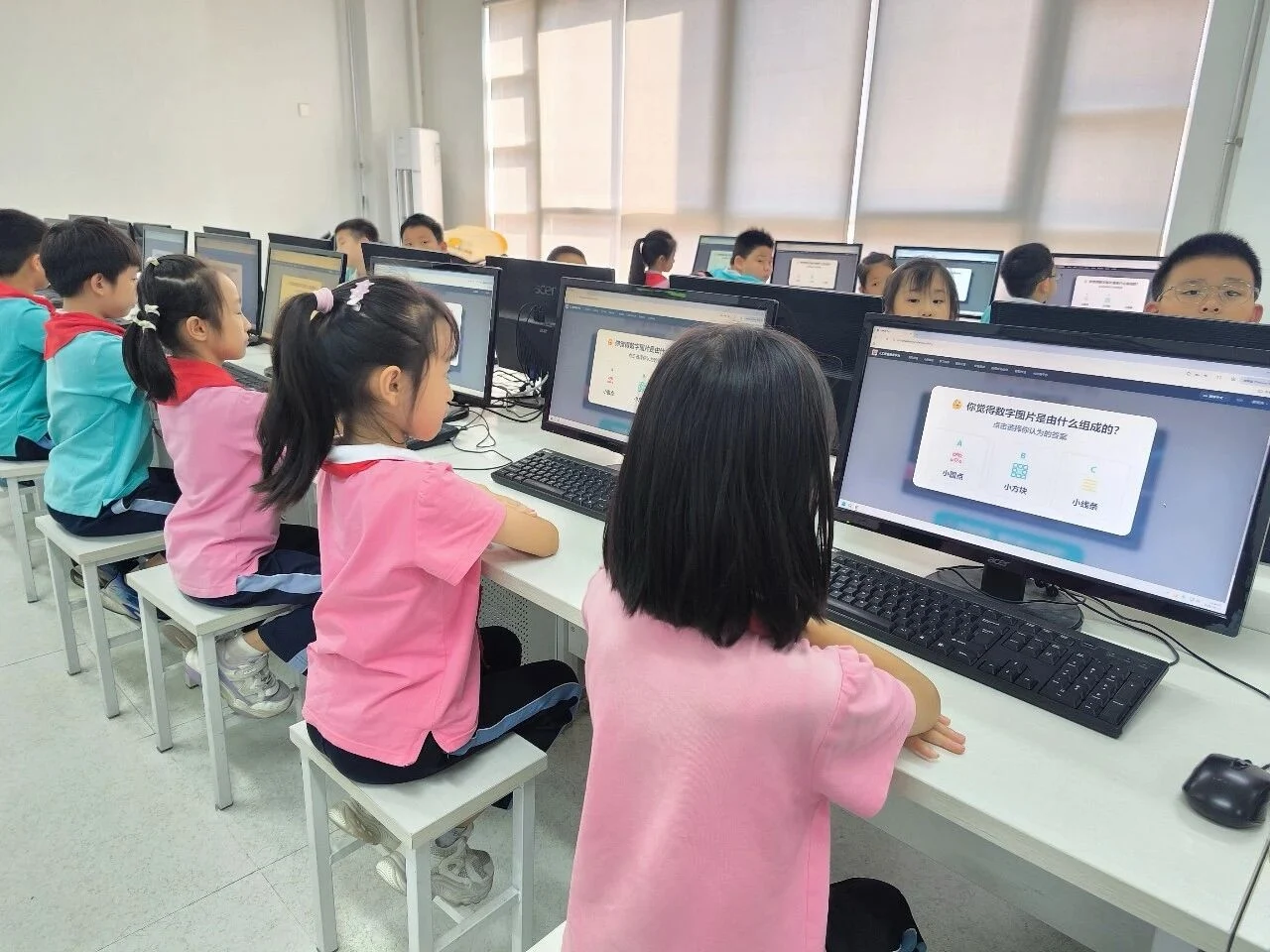
Through “The Secrets of Pixels,” students learned that digital images can be represented as a grid of pixels, each storing a numerical color value. They discovered that, for comparable images, higher pixel counts allow finer detail, and explored how computers store and read pixel data.
Using the magnifying glass feature in a pixel art tool, students zoomed in on ordinary images and watched them resolve into individual squares. This direct observation helped them see what pixels are and how they contribute to an image, deepening their understanding of the concept.
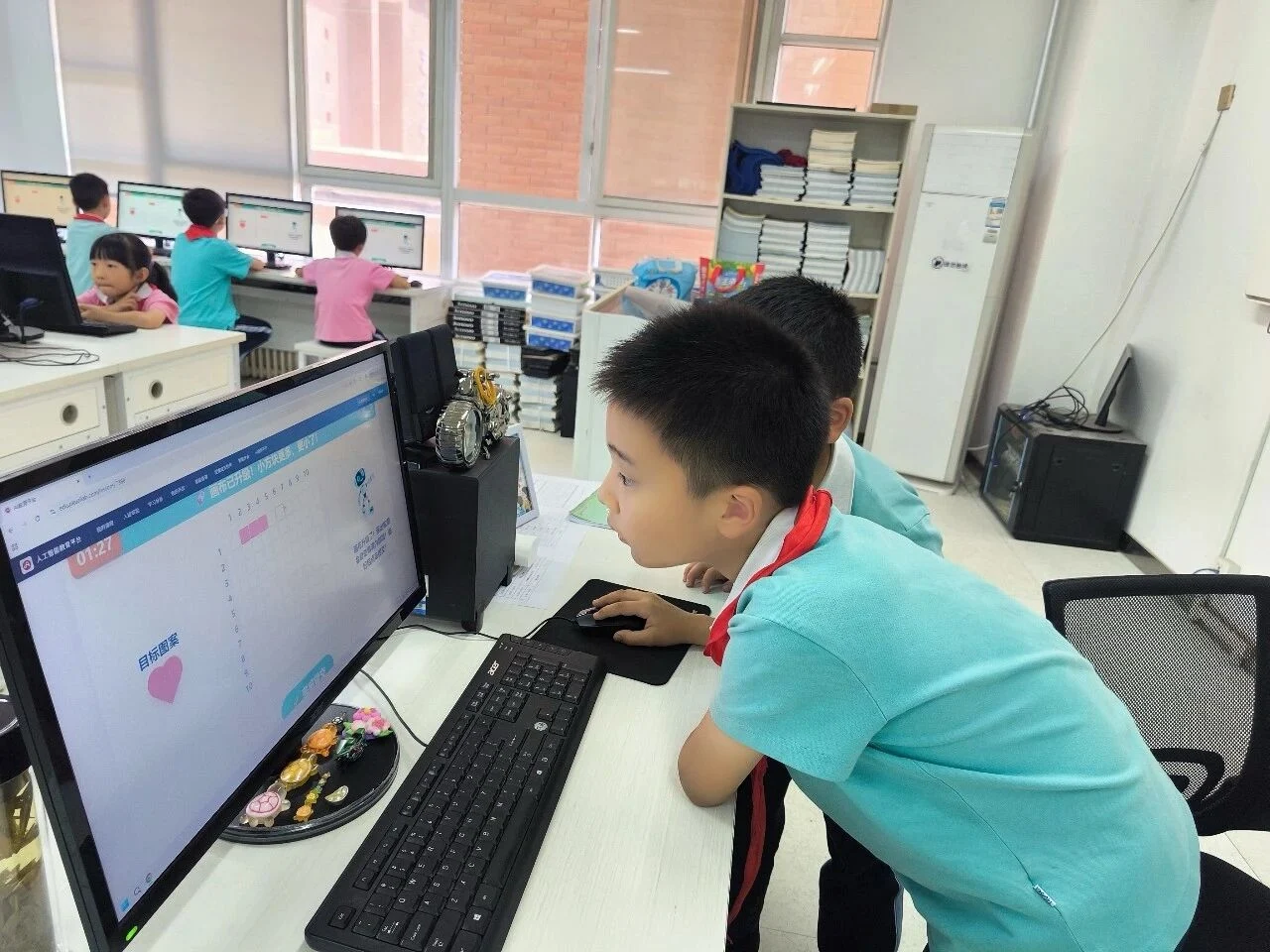
Students then opened “Pixel Art Studio” to design and draw their own artwork on a grid-based canvas. Features such as color selection and adjustment, an eraser, undo and redo, and artwork saving allowed them to create freely. Using their imagination, students produced distinctive pixel drawings of fruit, flowers, hearts, animals, houses, tanks, and more. During a showcase and discussion session, they shared their work and offered peer feedback on clarity, visual appeal, and creativity.
Through a combination of conceptual learning, exploration, and hands-on creation, the activity helped students begin to understand two central questions: how images are converted into numbers and how machines interpret images. Building on this experience, the school will further develop its AI literacy curriculum, extending learning to applications such as image recognition and AI-assisted creative activities. These efforts aim to sustain students’ interest in AI while strengthening their digital literacy and capacity for innovation.